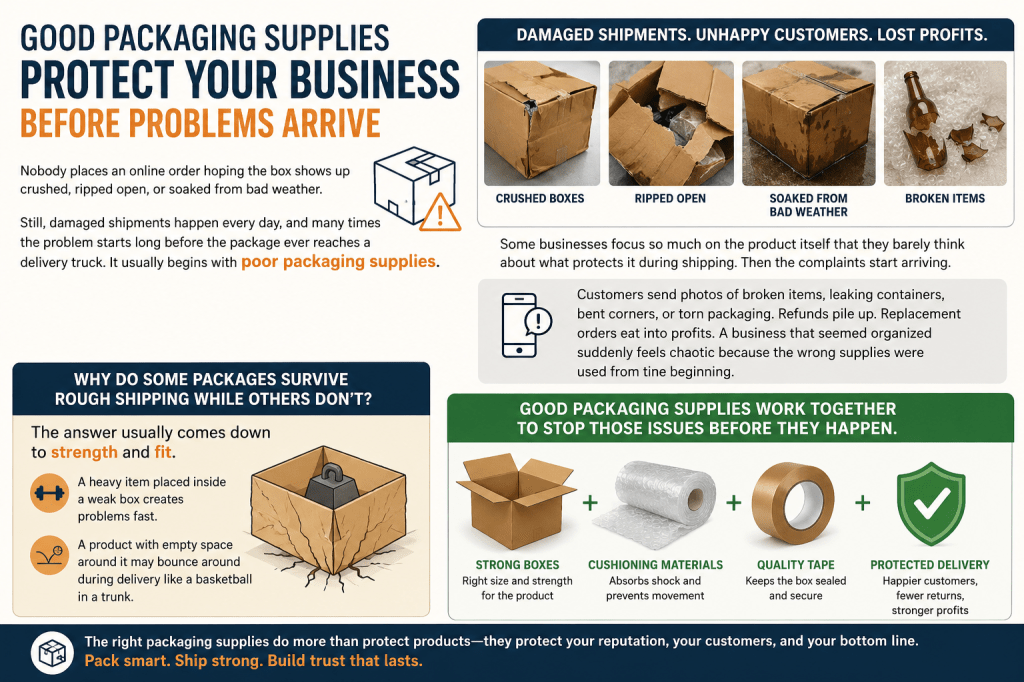
Nobody places an online order hoping the box shows up crushed, ripped open, or soaked from bad weather. Still, damaged shipments happen every day, and many times the problem starts long before the package ever reaches a delivery truck. It usually begins with poor packaging supplies.
Some businesses focus so much on the product itself that they barely think about what protects it during shipping. Then the complaints start arriving. Customers send photos of broken items, leaking containers, bent corners, or torn packaging. Refunds pile up. Replacement orders eat into profits. A business that seemed organized suddenly feels chaotic because the wrong supplies were used from the beginning.
One question people ask often is why some packages survive rough shipping while others fall apart so easily. The answer usually comes down to strength and fit. A heavy item placed inside a weak box creates problems fast. A product with empty space around it may bounce around during delivery like a basketball in a trunk. Good packaging supplies work together to stop those issues before they happen.
That does not always mean spending more money either.
A company shipping mugs, for example, may not need giant amounts of bubble wrap if the box itself fits properly and keeps the product snug. On the other hand, a loose oversized box may require extra filler material just to stop items from smashing into each other. Smart packaging choices often reduce waste instead of increasing it.
Tape matters more than many people realize too. Weak tape can peel away when boxes sit in hot trucks or cold warehouses for long periods of time. Once a box starts opening during transit, the chances of damage rise quickly. Strong sealing tape helps keep packages secure from the moment they leave the building until they reach the customer.
Another thing businesses ask about is how to keep shipping supplies organized. That becomes important once order volume starts growing. Workers lose time when they constantly search for labels, mailers, tape guns, or correctly sized boxes. A clean packing area with organized supplies can speed up shipping and reduce packing mistakes during busy days.
Some companies also worry about using too much packaging. Customers do not always enjoy opening a tiny product hidden inside layers of oversized materials. Excess packaging creates more waste and can make businesses appear careless. Many shoppers now appreciate companies that use packaging supplies wisely without overdoing it.
Weather is another hidden problem that catches businesses off guard. Cardboard stored in damp spaces can weaken before it is ever used. Labels may stop sticking correctly if they sit in humid environments too long. Even bubble cushioning can flatten over time if supplies are packed tightly for months without being rotated properly.
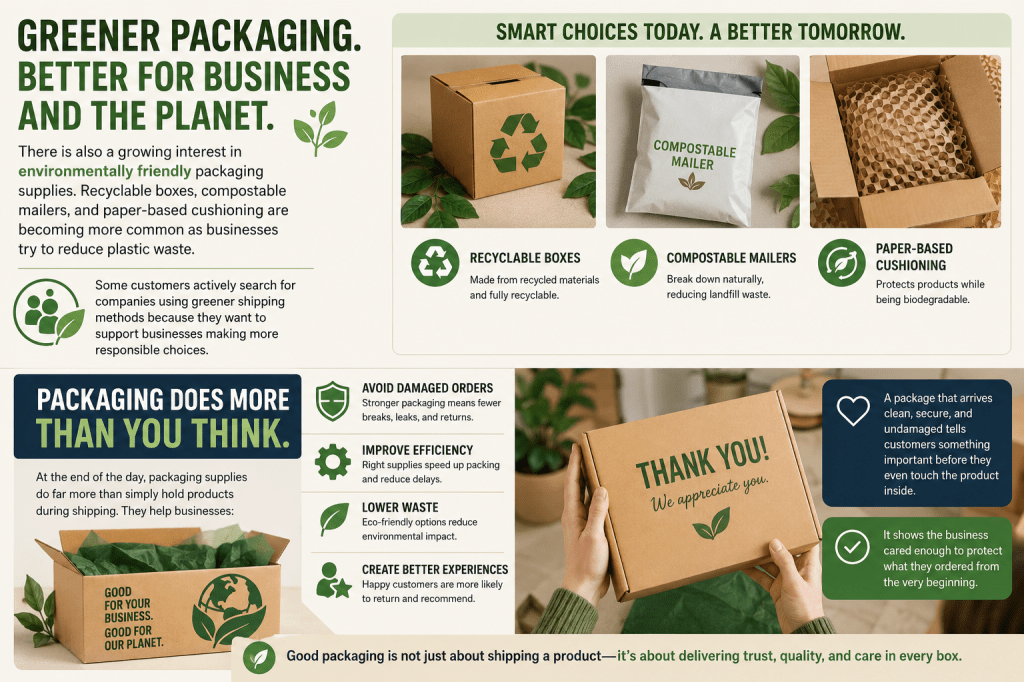
There is also a growing interest in environmentally friendly packaging supplies. Recyclable boxes, compostable mailers, and paper-based cushioning are becoming more common as businesses try to reduce plastic waste. Some customers actively search for companies using greener shipping methods because they want to support businesses making more responsible choices.
At the end of the day, packaging supplies do far more than simply hold products during shipping. They help businesses avoid damaged orders, improve efficiency, lower waste, and create a better customer experience. A package that arrives clean, secure, and undamaged tells customers something important before they even touch the product inside. It shows the business cared enough to protect what they ordered from the very beginning.

