Shipping boxes can be very sturdy and yet have an open seam when they arrive. More often than not this occurs due to the fact that tape has been applied to only one of the seams. A single piece of tape may hold the two center flaps together; however, it leaves two other seams exposed to potential problems caused by dirt, water, etc., as well as external pressure.
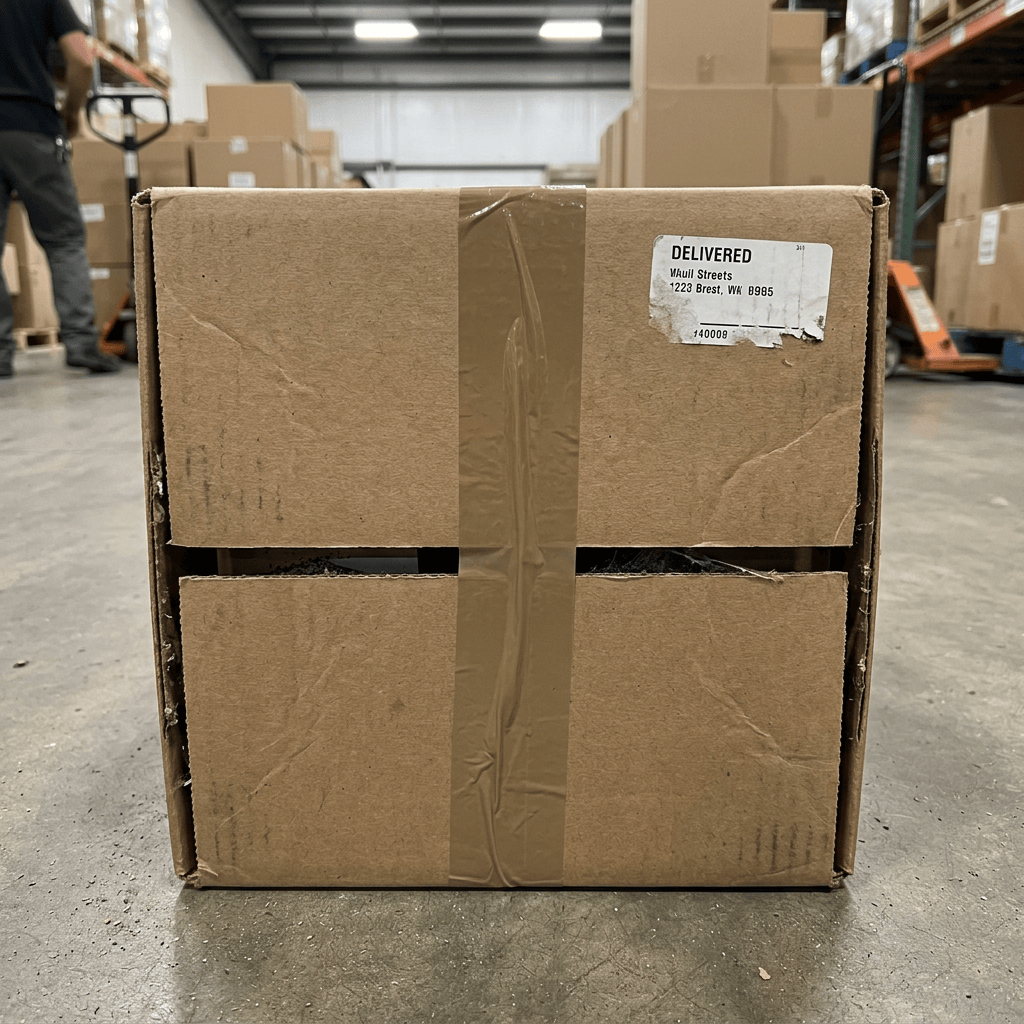
Before you seal the shipping box ensure that the flaps are aligned and fit properly into position. If the upper flap does not close with ease, it is possible that the box is overfilled. When you push the flaps together and use tape to secure them you are putting additional stress on the area of the tape. At some point this added pressure could result in the tape losing adhesion (lifting) once it has dried.
When you apply tape to a shipping box select a product designed specifically for sealing cartons. There are many products labeled as tape that may appear strong but may not provide sufficient holding power for cardboard. Select a tape suitable for the expected weight of the contents along with the storage environment. For example, if the item weighs considerably or is being shipped to a colder storage area choose a heavier duty product than would be used for lighter items stored at normal temperatures.
First, begin at the longer seam where the two top flaps meet. Apply one strip completely covering the entire seam. Allow the tape to extend approximately 6-8″ down both ends of the box. Firmly press the tape onto the cardboard ensuring there are no air pockets or loose spots remaining.
Next apply a similar strip to each of the shorter seams located at each end of the box. Once completed, you should see three strips forming an ‘H’ pattern. The above-mentioned method provides closure to the central seam as well as both edge seams resulting in less opportunity for an unsecured flap to become dislodged.
Apply a similar seal to the bottom seam prior to loading merchandise. Many packers expend considerable effort securing the top seam while neglecting to secure the bottom seam which bears the entire weight. Failure of a poorly sealed bottom seam may occur immediately upon lifting of the package. Unfortunately, inspecting it after loading the merchandise is usually too late.
Store packing tape in a clean dry area free from oils, grease and moisture. Although quality carton tape performs satisfactorily under most conditions, excessive contact with these substances can render the adhesive ineffective. Remove any loose debris from the surface of any wet or damaged cardboard and allow it to thoroughly dry. In cases where a shipment arrives severely wetted out, it is advisable to discard it rather than attempt to salvage it with additional strips.
Utilize a dispenser capable of cutting a consistent length of tape. Tape torn or twisted by manual handling is significantly more difficult to apply and may contain inherent weaknesses. Maintain your dispensers’ cutting blades in working order and instruct employees to handle tape steadily and avoid stretching it excessively as this can lead to separation of the adhesive layer upon completion of application.
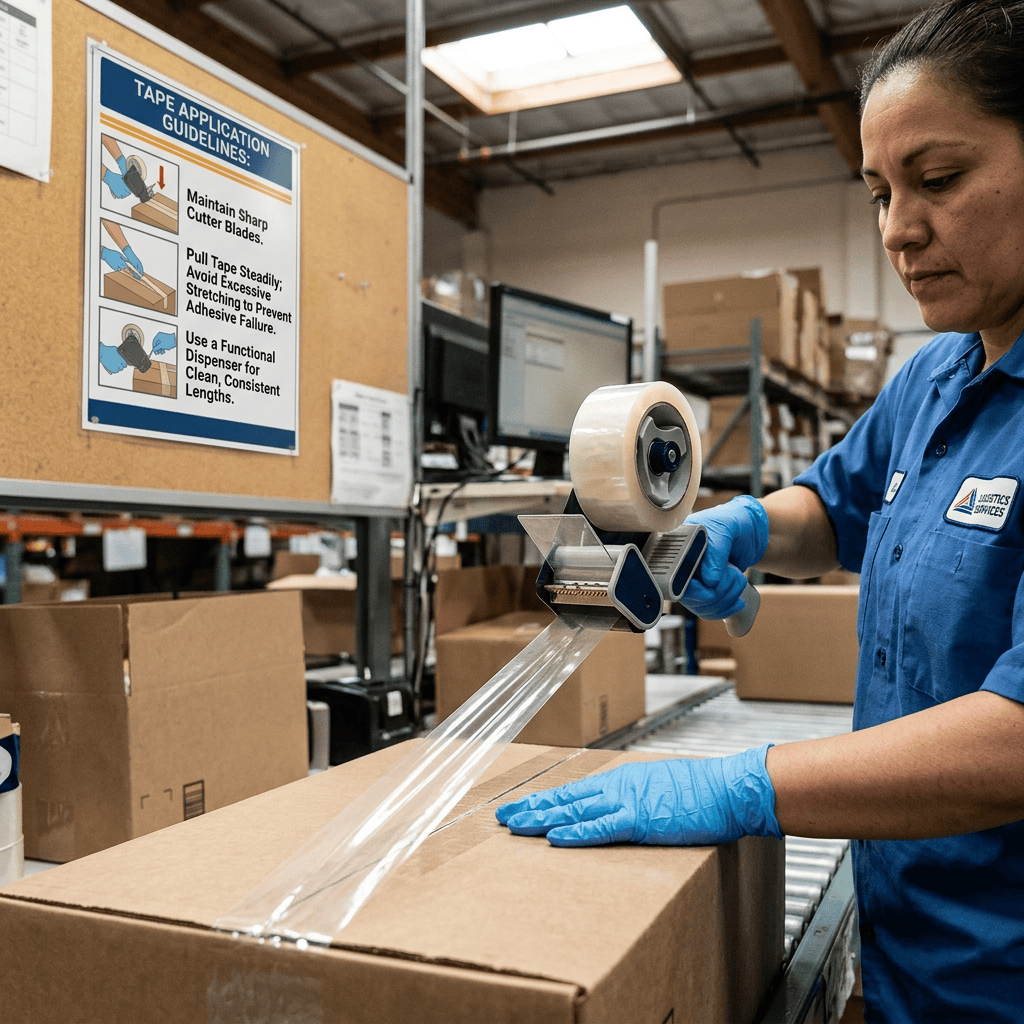
Upon completion of packaging inspect all six surfaces (top, bottom, left and right sides). Using your hands press each strip firmly in place. Inspect for raised edges or areas where flaps do not lie flat. Also visually inspect for any openings (gaps). The final inspection only requires a brief amount of time but may identify issues prior to pick up.
Packing tape should perform more functions than just providing an appearance of sealing a shipping box. It should functionally maintain each of the individual flaps securely in their respective positions during transport via lifting, stacking and processing.

